
Blog
Rabby Wallet Cross-Chain Swaps: Why DeFi Security Begins Before the Trade

What if the most dangerous part of a cross-chain swap is not the exchange rate, but the transaction you approve before the swap even begins? That question changes how a cryptocurrency wallet should be evaluated. In early DeFi, users often treated a wallet as a digital keyring: connect it to a decentralized exchange, sign a transaction, and let the protocol handle the rest. As DeFi expanded across Ethereum-compatible networks and other ecosystems, that model became incomplete. A wallet now sits at the boundary between human intent, smart-contract code, bridges, token approvals, and multiple network fee systems.
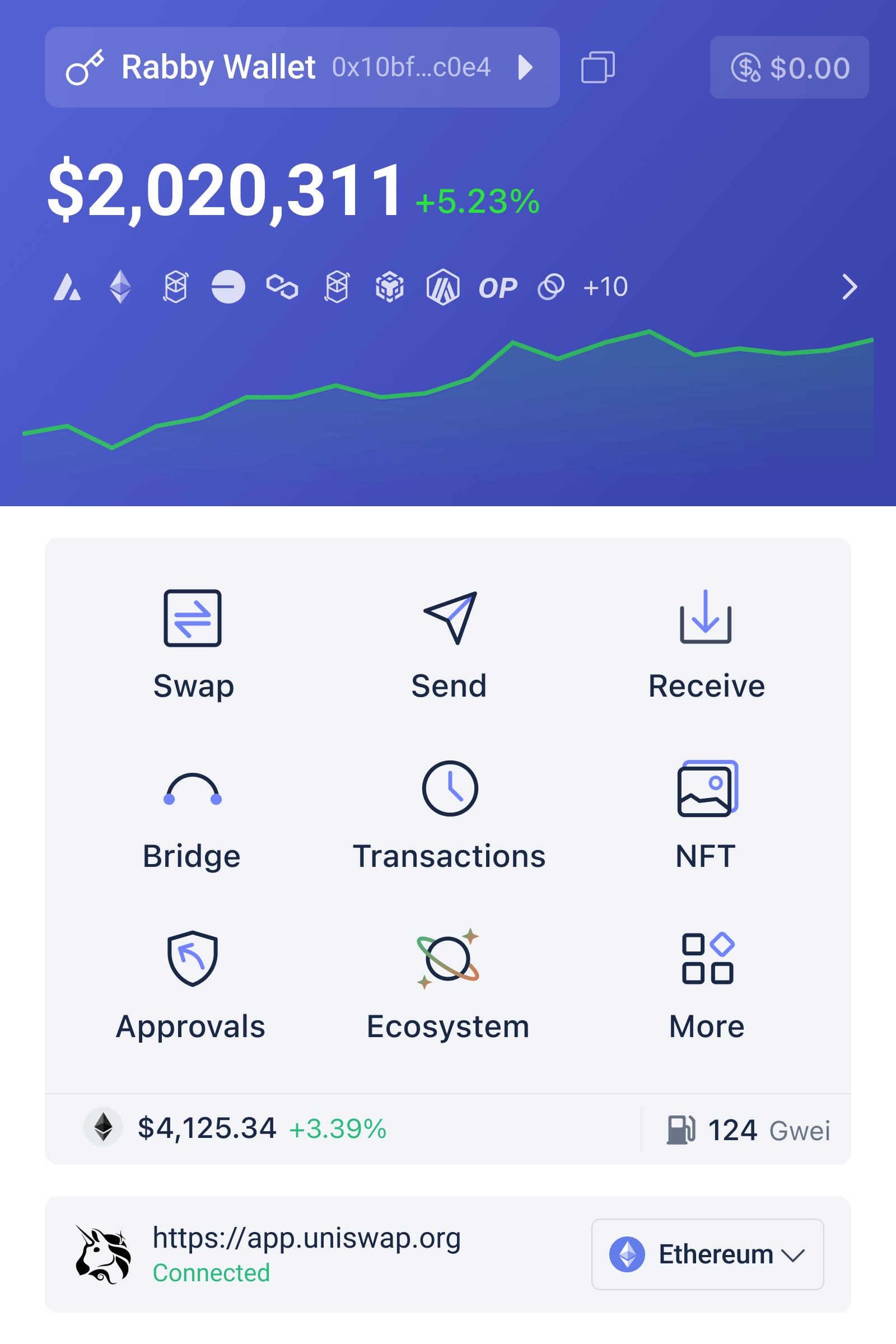
Rabby wallet cross-chain swaps are best understood through that boundary. The wallet does not make a blockchain transaction risk-free, and it cannot turn an untrusted protocol into a trusted one. Its practical value lies in helping users inspect what they are about to authorize, distinguish networks and assets, and reduce avoidable mistakes. That is a narrower claim than “security by default,” but it is also a more useful one.
From single-chain wallets to a fragmented DeFi environment
The first generation of mainstream crypto wallets was designed around a relatively simple mental model. A user held an asset on one network, connected to an application, and signed a transaction. Even then, the transaction could be complex, but the surrounding context was comparatively contained. Cross-chain DeFi changed the problem. A user might begin with a stablecoin on one network, route value through a bridge or interoperability system, swap into another token on a second network, and pay fees using the destination chain’s native asset.
A cross-chain swap is therefore not always one atomic exchange. In many cases it is a sequence: a source-chain transaction, a message or asset transfer, and one or more destination-chain actions. Each step can have a different contract, fee, confirmation state, and failure mode. The user may see a single interface, but the underlying system can involve several independent components. This is the first important distinction: a smooth user experience does not imply a simple settlement process.
Cross-chain routing can also produce a subtle form of information asymmetry. The quoted output may be clear, while the route’s assumptions are less visible. A bridge may rely on a particular verification design. A token may be represented differently on the destination chain. Slippage—the difference between the expected and final execution price—may apply to one leg of the route but not another. If a transaction fails after the source-side transfer succeeds, recovery may depend on the application’s design rather than on the wallet itself.
What a wallet can improve—and what it cannot guarantee
A wallet can act as a decision surface. Before signing, a user should be able to answer basic questions: Which network am I using? Which asset is being spent? Which contract receives permission? Is the transaction a normal token transfer, an approval, a swap, a bridge interaction, or a combination? Are the expected outputs consistent with the stated route? These questions sound elementary, yet many losses occur because users approve a familiar-looking prompt without understanding the underlying call.
For users installing the rabby wallet extension, the sensible objective is not simply to gain access to more chains. It is to create a more deliberate review step between an application’s request and the user’s signature. A browser extension can make network context, account identity, transaction details, and contract interactions easier to inspect. That can reduce errors such as signing on the wrong account or confusing a token on one chain with a similarly named token on another.
However, transaction displays have a boundary. A wallet can interpret the requested call and provide warnings or simulations where such information is available, but it cannot know with certainty whether a project’s governance will change, whether an external oracle will fail later, or whether a seemingly legitimate domain will be compromised after the transaction is signed. Simulation is evidence about a possible execution, not a legal or economic guarantee. A transaction that succeeds technically can still be a poor trade, expose excessive allowance, or interact with a protocol whose incentives have deteriorated.
This leads to a useful security principle: review the meaning of an authorization, not merely its appearance. An approval may allow a contract to spend a token repeatedly until the allowance is reduced or revoked. A permit-style signature may authorize spending through a different mechanism than a conventional on-chain approval. A bridge transaction may lock or burn an asset on one network while causing a representation to appear elsewhere. The exact details vary by protocol, but the general risk is stable: convenience compresses several decisions into one click.
The security model behind cross-chain swapping
Cross-chain security is layered. The first layer is wallet security: protecting the private key or signing authority, securing the browser environment, and verifying the account being used. The second is application security: assessing whether the decentralized exchange, bridge, or aggregator behaves as intended. The third is network and infrastructure security: considering consensus assumptions, relayers, validators, message verification, liquidity, and chain reorganizations. A strong result at one layer does not compensate for a weakness at another.
For a US-based DeFi user, there is also a practical operational layer. Network fees may be paid in different native assets, and an account that holds plenty of dollars’ worth of tokens may still be unable to complete a transaction if it lacks the required gas token on the active chain. During periods of congestion, the cost and timing of a route can change. A quote that looked attractive a few minutes earlier may no longer be economical after fees, slippage, and bridge costs are included.
One non-obvious mistake is to treat chain selection as a cosmetic setting. It is not. The same wallet address format can appear across several networks, while balances, contracts, and transaction histories remain chain-specific. Sending a token to the right-looking address on the wrong network may create a recovery problem. Likewise, a token with a familiar ticker can be an unrelated contract. Contract addresses and network context are more reliable identifiers than symbols or logos.
Another mistake is to assume that a reputable wallet endorses every connected application. Wallet interoperability is not the same as protocol approval. A wallet may provide access to a broad DeFi environment because users need flexibility, but that flexibility transfers responsibility back to the user. The safer approach is to separate three judgments: whether the wallet software is suitable, whether the application is credible, and whether the individual transaction is economically and technically sensible.
A practical review framework before signing
Before a cross-chain swap, begin with intent. State the desired result in plain language: “I want to exchange this amount of this asset on this source network for that asset on the destination network.” If the wallet or application presents a transaction that cannot be reconciled with that sentence, stop. This simple comparison is powerful because it catches requests that are technically valid but unrelated to the user’s actual goal.
Next, inspect the route rather than only the headline output. Identify whether the transaction uses a bridge, an aggregator, a liquidity pool, or several of these. Check the minimum received amount and the deadline where available. Consider whether the destination asset is liquid enough to sell or use. A high quoted output is not automatically valuable if the route depends on thin liquidity or exposes the user to substantial price impact.
Then examine permissions. Ask whether the application needs a limited allowance for the intended amount or a much larger, potentially persistent allowance. Avoid treating unlimited approval as a harmless convenience, particularly when interacting with unfamiliar contracts. If an application requests a signature or permission that does not fit the expected swap, reject it. The cost of restarting a route is usually smaller than the cost of explaining an unauthorized transfer.
Finally, test the process with a small amount when the route, bridge, or destination network is unfamiliar. This is not a guarantee of safety; a small transaction can succeed while a later transaction encounters different liquidity or contract behavior. It is nevertheless a useful operational control. Keep enough native gas assets on both relevant networks, confirm the destination chain, and preserve transaction identifiers so that a delayed or incomplete transfer can be investigated rather than guessed at.
What matters next for wallet design
The next stage of wallet design will likely be judged less by the number of supported networks than by the quality of cross-chain reasoning shown to the user. If wallets can present route composition, permission scope, estimated total cost, destination-chain conditions, and meaningful warnings without overwhelming the interface, users may make fewer avoidable mistakes. That outcome is conditional: it depends on accurate protocol metadata, reliable simulations, and users who treat warnings as prompts for investigation rather than as automatic approvals.
The unresolved issue is that security and convenience pull in opposite directions. More automated routing can reduce technical friction, but it can also hide assumptions. More warnings can improve disclosure, but too many low-quality alerts may train users to click through them. The strongest design is therefore not the one that promises perfect protection. It is the one that makes important uncertainty visible at the moment a decision is made.
Frequently Asked Questions
Are cross-chain swaps safer because a wallet previews the transaction?
A preview can improve understanding and catch mismatches between the requested action and the user’s intention, but it is not a guarantee. The preview may not capture future protocol changes, oracle failures, liquidity shocks, compromised websites, or every economic consequence of a route. Treat it as one security control within a broader review process.
Why might a wallet show funds but still be unable to complete a swap?
Balances are network-specific. An account may hold valuable tokens on one chain but lack the native asset needed to pay gas on the chain where the transaction is being submitted. Cross-chain routes can also require separate fees or destination-side actions. Confirm the active network, required gas asset, and route before signing.
What is the most important habit for Rabby wallet cross-chain swaps?
Match the transaction to your plain-language intent before approving it. Verify the network, asset contract, recipient or protocol, expected output, slippage, and permission scope. If any element is unclear, do not rely on familiarity or urgency; pause and investigate the route.
Cross-chain DeFi does not eliminate the need for judgment; it makes judgment more structured. A wallet such as Rabby can help users see more of the transaction context, but the decisive security improvement comes from understanding what is being authorized and why. The right mental model is not “the wallet protects me from DeFi.” It is “the wallet helps me inspect a multi-layer system before I commit funds to it.”